
When Words Feel Heavy: How Depression Changes Everyday Communication

Updated: Mar 31
What depression can do to language and nonverbal communication. Demonstrates what's happening in the brain and how individuals and families can respond.
Chris’s family and friends have recently noticed changes in how they communicate.
They used to be talkative and energetic, smiling and gesturing, leaning toward others in
conversation, and always up for an outing like a movie or a walk in the park. Now, Chris
only talks when asked a direct question and their answers are short. They don’t smile or
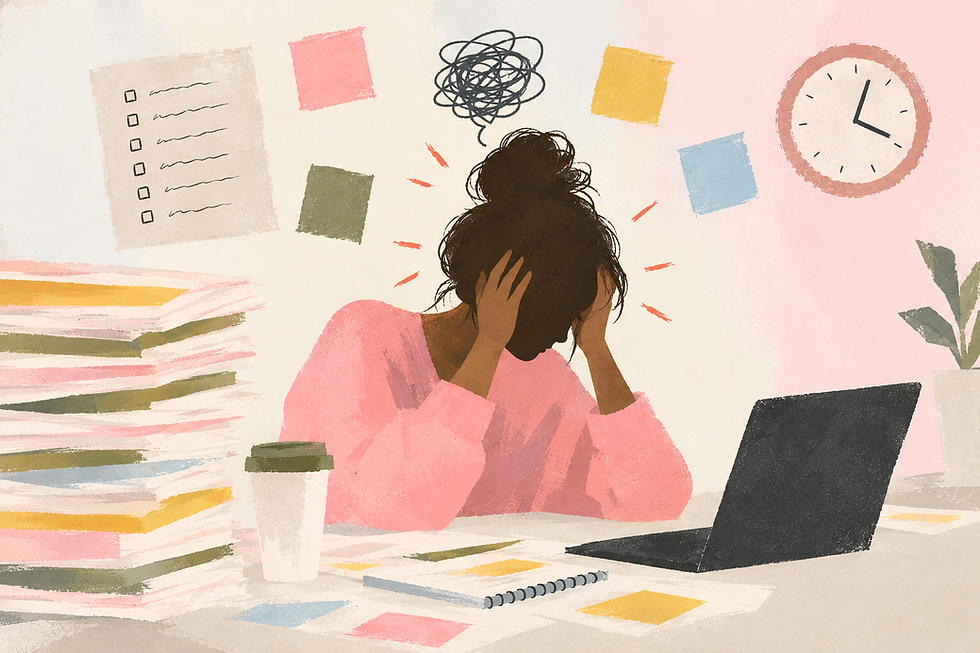
gesture and sit with a drooped head, avoiding eye contact. They move and respond
slowly and without their usual energy. They make plans and then cancel at the last
minute. When people ask what’s wrong, they say “I’m fine,” but they feel disconnected
from everyone around them.
These changes aren’t just about mood. They are signs of depression, which often
reshapes how we use language and nonverbal communication to connect with others.
What depression can do to language
Depression can cause noticeable changes in speech. Depressed people may speak
more slowly, and even short conversations can feel like hard work for them. They may use
shorter sentences, pause longer, take more time to answer, and struggle to find the words
they want.
Conversations may also feel more negative. They may talk mostly about feeling sad,
hopeless, or guilty, and when they talk about these topics, their tone of voice tends to be
flat. They rarely talk about positive emotions like happiness or enjoyment, but when they
do, their tone still tends to sound negative.
What depression can do to nonverbal communication
Depression is also linked with changes in nonverbal behavior. Depressed people
usually show fewer facial expressions overall, and what expression is there is more likely to
be frowning than smiling. You may notice much less eye contact. When listening, they
may look down or away rather than at you, so it can feel like they are not listening even
when they are. Their body may be slumped, head tilted downward, arms crossed, and
their movements slower and more inward.
Qualities of the voice can change as well. Depressed people may speak more quietly
and in a monotone and may sigh more often.
.
What’s going on in the brain
Many things change in the brain during depression, and this is only a brief overview of
some that affect communication.
Three key brain chemicals involved are serotonin, norepinephrine, and dopamine. In
depression, there may be too much or too little of one or more of these neurotransmitters
acting on brain cells. When this happens, social interactions feel less rewarding, so the
person is less likely to start conversations, shows more monotone speech, and has fewer
facial displays of emotion.
The amygdala, a small area that helps us notice important things—especially threats
—and triggers emotional and “fight‑or‑flight” responses, also changes. In depression, the
amygdala responds less to happy faces and sends “avoid” signals about social
interaction. This can show up as less eye contact, reduced smiling, and withdrawal
behaviors such as leaning back or turning away when others show positive emotion.
The cortex—the thin outer layer of the brain used for thinking and meaning making—is
affected too. In depression, some cortical connections are disrupted, making it harder to
recognize emotions, notice social cues, and accurately read facial expressions. Neutral
expressions may be misread as negative or critical, which can further increase
How to respond
The first step in responding to a person with depression is to communicate more
slowly, simply, and concretely, and with extra warmth. Express concern but try not to give
advice or pep talks. Listen more than you talk. Reflect the person’s feelings (“That sounds
really heavy”) and avoid arguing with their pessimism or guilt. Use short, clear,
nonjudgmental phrases and allow pauses; it may take them longer to find words.
Normalize depression as a health condition and gently suggest professional help.
Nonverbally, keep your posture open, your voice soft and steady, and your eye
contact gentle rather than intense, to counter their expectation of being a burden or a
threat. Sit nearby or alongside rather than looming over them; quiet, calm presence alone
can help. Try to be predictable—show up when you say you will and respond consistently
to messages—so their brain can slowly re‑learn that others are safe and available.
Most importantly, take any mention of self‑harm seriously and seek professional or
emergency help rather than trying to handle it alone.
Remember that irritability, withdrawal, or lack of emotion are symptoms, not a verdict
on you, so try not to take them personally. Set kind but firm boundaries (“I care about you
and I also need to sleep now; let’s talk again tomorrow”) so your support remains
sustainable. Learn more about depression and, if needed, seek your own support through
friends, therapy, or support groups so you’re not carrying everything alone. Maintain some
of your own routines and sources of meaning; this protects you from burnout and models
healthy regulation for the person you care about.
Disclaimer
This blog serves solely for educational purposes and it is not intended for diagnosis or treatment. If someone believes they are experiencing depression or its symptoms, it is crucial to seek assistance from a mental health professional.


This is so great. The section on "how to respond" is especially helpful ("...try not to give advice or pep talks")
Thank you!!
Such a great read with lots of insight!
Very insightful!
Very informational!